Business Operations
Transform Your Inventory System Into a Demand Forecasting Engine
18 July 2025 · Yash Kapoor · 7 min read
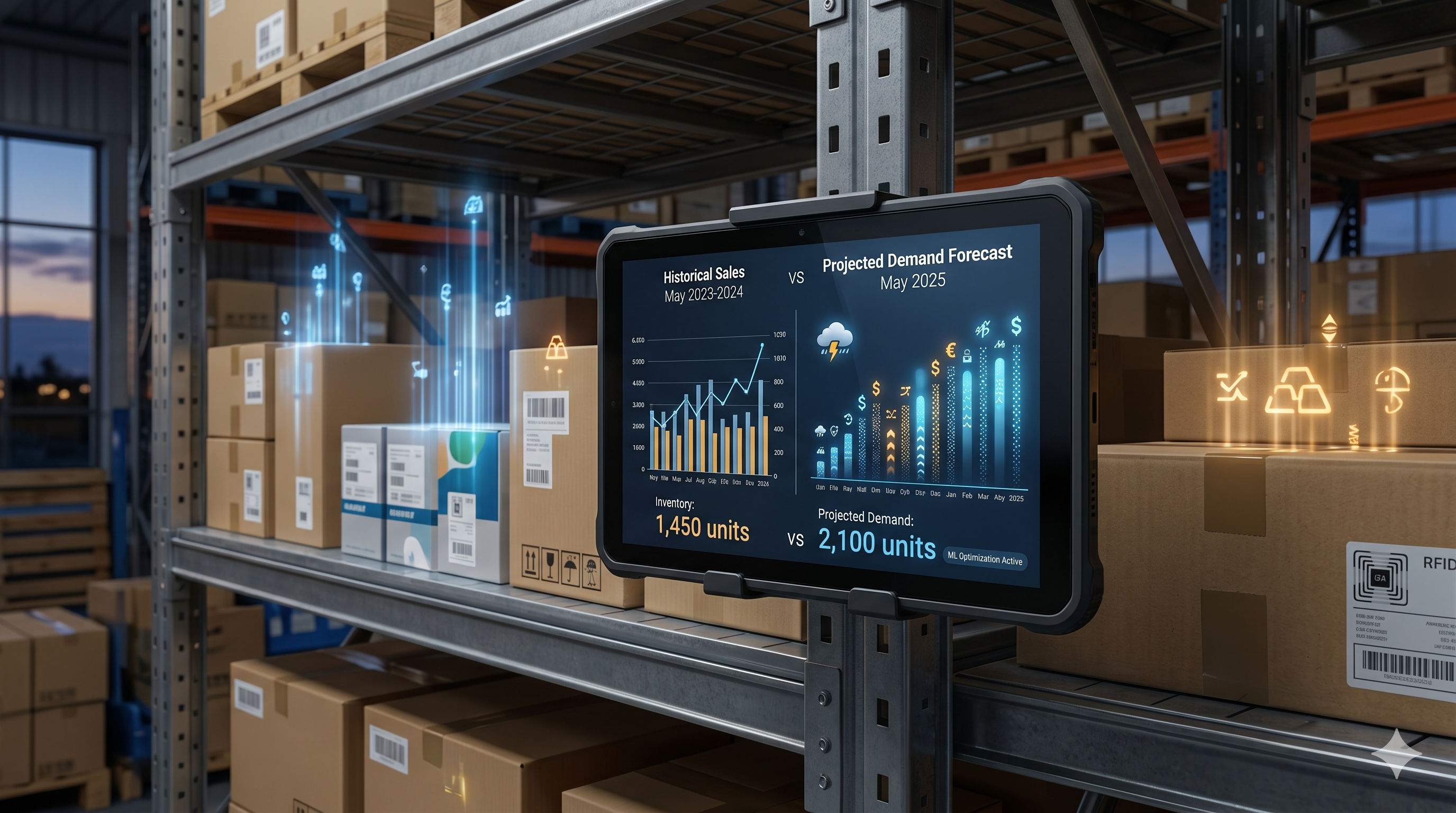
Picture this: You’ve just lost a major sale because you couldn’t fulfil an order. Meanwhile, your warehouse is packed with slow-moving stock tying up your capital. Sound familiar?
For too many businesses, inventory management remains stuck in the past—focused on what’s already happened rather than what’s coming next. This reactive approach costs Australian and New Zealand companies millions each year in lost sales, excessive holding costs, and wasted resources.
Modern inventory management isn’t just about tracking what you have. It’s about predicting what you’ll need.
The Limitations of Traditional Inventory Systems
Traditional inventory systems do one thing reasonably well: they tell you what you have right now. However, they fall woefully short in helping you understand what you’ll need tomorrow.
“We were drowning in data but starving for insights,” explains a operations director at a mid-sized distribution company. “Our system could tell us exactly how many units were on the shelf, but couldn’t help us decide how many we should order for next month.”
This “digital warehouse” problem creates three major issues:
Costly stockouts: When customer demand outpaces your inventory, you lose immediate sales and potentially future business. Research shows that 37% of customers who encounter an out-of-stock situation will shop elsewhere rather than wait.
Capital-draining overstocking: The fear of stockouts often leads to excessive purchasing. One manufacturing study found that the average company overbuys by 20-30%, with carrying costs running at 25% of inventory value annually.
Reactive decision-making: Without forecasting capabilities, businesses constantly operate in crisis mode—rushing emergency shipments or discounting excess stock.
Simply put, when your inventory system only looks backwards, you’re always catching up rather than staying ahead.
The Shift to Predictive Inventory Management
Forward-thinking companies have transformed inventory from a necessary evil into a strategic advantage by embracing predictive capabilities.
Consider how a mid-sized food distributor reduced their waste by 31% while improving order fulfilment rates. Their secret wasn’t carrying more inventory—it was better predicting which products would sell when.
“We stopped treating inventory as a storage problem and started seeing it as a forecasting challenge,” their supply chain manager explained. “This shift in perspective changed everything.”
The most successful businesses now understand that inventory management and business intelligence aren’t separate functions but deeply interconnected systems that should inform each other.
Key Components of a Forecasting-Enabled Inventory System
What separates basic stock tracking from true predictive inventory management? These essential elements:
Historical Analysis Beyond Reorder Points
Traditional systems focus on minimum and maximum stock levels. Modern systems analyse sales velocity, seasonal patterns, and product lifecycles to reveal when demand will change, not just when you’ve hit a threshold.
External Factor Integration
Your inventory doesn’t exist in a vacuum. Leading systems incorporate weather forecasts, economic indicators, competitor actions, and even social media trends to anticipate demand fluctuations.
For example, a building materials supplier in Queensland can now predict a 40% increase in certain products when weather forecasts show storms approaching—allowing them to prepare stock accordingly.
Machine Learning Applications
The most sophisticated systems employ algorithms that continuously learn from outcomes, improving prediction accuracy over time.
As one technology director put it, “Our system gets smarter with each sales cycle. It now recognises patterns we never would have spotted manually.”
Implementing Demand Forecasting in Your Inventory System
You don’t need to overhaul your entire operation overnight. Start with these practical steps:
Begin with Basic Forecasting Techniques
Even simple moving averages and seasonal indices can dramatically improve prediction accuracy compared to gut feelings. For instance, analysing year-over-year performance by week can reveal patterns that monthly averages miss.
Focus on Data Quality
Your forecasts are only as good as your data. Start by auditing your current inventory records for accuracy. Are your SKUs consistent? Do you capture sales data correctly? One retail company discovered that 15% of their “stockouts” were actually data entry errors.
Connect Your Systems
Inventory doesn’t exist in isolation. Link your inventory management with your point-of-sale, CRM, and marketing platforms. When these systems talk to each other, you gain visibility into the entire customer journey.
Measuring Success: KPIs for Predictive Inventory Management
How do you know if your forecasting efforts are working? Track these metrics:
Inventory Turnover Improvements
The average business turns inventory 4-6 times annually. Companies with effective forecasting often achieve 8-12 turns without sacrificing availability. Each additional turn represents capital freed for other investments.
Stockout Reduction
Measure both frequency (how often stockouts occur) and impact (how many sales are affected). Companies implementing forecasting typically reduce stockouts by 20-50% within the first year.
Holding Cost Reduction
Calculate your true holding costs—including storage, insurance, depreciation, and opportunity cost of capital. Effective forecasting typically reduces these costs by 10-30%.
Future Trends: Where Inventory Forecasting is Headed
The evolution continues as technology advances:
IoT and Real-time Tracking
Smart shelves, RFID tags, and connected devices are eliminating manual counting and creating real-time inventory visibility. This continuous data flow makes forecasting even more precise.
Collaborative Forecasting
Leading companies now share forecasting data with suppliers and key customers, creating aligned supply chains that reduce costs for everyone. One electronics distributor reduced overall supply chain costs by 17% through collaborative forecasting with their top suppliers.
Sustainability Benefits
Precise inventory management dramatically reduces waste. A food service company cut their food waste by 35% by better predicting demand patterns—saving money while reducing environmental impact.
Moving from Reactive to Proactive Inventory Management
Your inventory system should do more than tell you what you have—it should tell you what you’ll need and when you’ll need it.
The businesses gaining competitive advantage today aren’t just tracking their products; they’re anticipating market demands before they materialise. They’re transforming inventory from a necessary cost into a strategic asset that drives profitability.
Ask yourself: Is your inventory system merely storing information, or is it generating insights that drive better decisions?
Ready to explore how predictive inventory management could transform your operations? Book a free consultation at www.innovatenow.co.nz or email us directly at info@innovatenow.co.nz. Our team can help you assess your current systems and identify opportunities to implement forecasting capabilities that fit your specific business needs.
Want to see how we apply this for NZ and AU businesses? Learn more about our approach to finance and inventory.