Business Technology
How ERP Systems Power Business Growth in Australia & NZ
25 June 2025 · Yash Kapoor · 7 min read
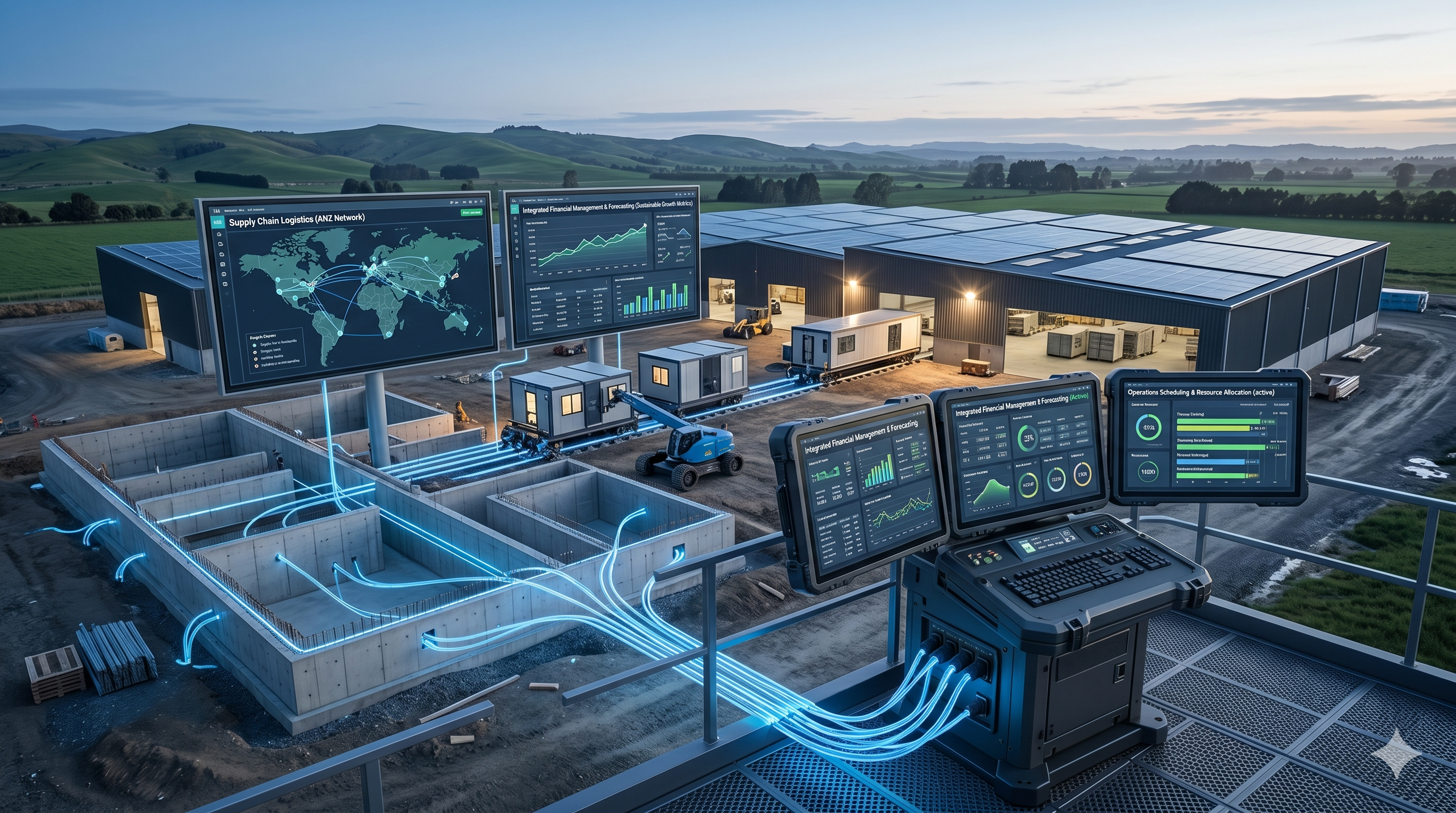
Running a business without proper systems is like driving with your eyes half-shut. You’ll move forward, but you’re likely to miss crucial details and eventually crash. For many growing companies, disconnected software creates endless frustrations – important data trapped in different systems, teams working from conflicting information, and leadership lacking the clear visibility needed to make confident decisions.
Enterprise Resource Planning (ERP) systems solve these challenges by connecting all aspects of your business into a cohesive whole. Rather than wrestling with multiple programs that don’t talk to each other, ERP creates a unified platform where information flows seamlessly between departments, processes run efficiently, and leadership gains the insights needed to drive strategic growth.
Let’s explore how modern ERP systems serve as the backbone supporting sustainable business expansion – and why they’ve become essential for companies looking to scale without the growing pains.
The Anatomy of an Effective ERP System
At its core, an ERP system integrates key business functions onto a single platform. Rather than separate systems for different departments, everything connects through a central database. This typically includes:
- Financial management (accounting, budgeting, reporting)
- Supply chain and inventory control
- Human resources and payroll
- Customer relationship management
- Manufacturing and production planning
- Project management and reporting
We’ve come a long way from the early days of ERP, when these systems were expensive, rigid, and primarily used by large corporations. Today’s cloud-based ERP solutions are more flexible, accessible, and purpose-built for mid-sized businesses.
The most valuable aspect of a modern ERP system is that it creates a “single source of truth” for your organisation. Everyone works from the same data, eliminating the information silos that typically develop as companies grow. For example, when a sales representative enters a new order, that information immediately becomes available to finance, warehouse staff, and production teams without anyone needing to re-enter data or send manual updates.
Breaking Down Operational Silos
For many businesses, departments naturally develop into isolated units with their own processes, data, and sometimes even their own software solutions. Finance might use one system, while sales uses another, and operations yet another. This fragmentation creates serious inefficiencies.
An ERP system breaks down these barriers by connecting departments through shared processes and information. For instance:
When a sales team closes a deal in an ERP system, the finance department automatically sees the new revenue in their forecasts, the warehouse receives picking instructions, and production can adjust manufacturing schedules – all without a single email, phone call, or meeting.
A manufacturing business that implemented an integrated ERP solution found that their production lead times dropped by 30% simply because they eliminated the communication gaps between sales, inventory management, and shop floor operations. Orders no longer sat waiting for someone to pass information along.
The benefits of this connectivity compound as businesses grow. Instead of communication becoming more complex with size, an ERP system maintains smooth information flow regardless of how many people or locations you add.
Data-Driven Decision Making
Running a business on gut instinct might work in the early stages, but sustainable growth requires informed decision-making based on accurate, timely data.
Modern ERP systems transform raw business data into actionable insights through sophisticated reporting and analytics tools. Rather than waiting for monthly reports compiled from various spreadsheets, leadership can access real-time dashboards showing exactly how the business is performing across all departments.
For example, a distribution company might use their ERP dashboard to simultaneously track:
- Current inventory levels and turnover rates
- Outstanding customer orders and delivery timeframes
- Employee productivity and labour costs
- Cash flow projections and outstanding invoices
- Profit margins across different product lines
This visibility enables more proactive management. Instead of discovering inventory shortages after customers complain about delays, managers can see potential stock issues weeks in advance and adjust purchasing accordingly. Rather than learning about cash flow problems when the bank account is empty, finance teams can forecast constraints and take corrective action early.
Furthermore, advanced ERP systems incorporate predictive analytics that help businesses anticipate future trends based on historical data. This capability transforms management from reactive problem-solving to proactive opportunity-seizing.
Scaling Operations Without Scaling Headcount
One of the most compelling benefits of ERP for growing businesses is the ability to handle increasing transaction volumes without proportional increases in staff.
Consider the accounts payable process. In a manual or fragmented system, processing vendor invoices requires considerable human intervention – receiving the invoice, entering it into the system, routing it for approval, matching it against purchase orders and receiving documents, scheduling payment, and finally recording the transaction.
An ERP system automates much of this workflow. Invoices can be captured electronically, automatically matched against purchase orders, routed for digital approval based on predefined rules, and scheduled for payment – all with minimal human intervention.
A wholesale distributor that implemented an ERP solution found they could process three times their previous invoice volume with the same accounting team. The automation not only saved on hiring costs but also reduced errors and processing time.
This same principle applies across the business. Order processing, inventory management, customer service, and other operational areas can all scale more efficiently when supported by an ERP system that standardises and automates routine tasks.
Financial Visibility and Control
For many business leaders, financial transparency ranks among the top benefits of implementing an ERP system. Rather than piecing together financial information from various sources, an ERP provides complete visibility across the entire organisation.
This comprehensive view includes:
- Real-time profit and loss reporting by department, product line, or customer segment
- Cash flow forecasting that incorporates all aspects of the business
- Budget tracking with automated variance analysis
- Project and job costing that pulls data from throughout the organisation
- Consolidated financial statements that encompass multiple business units or locations
A manufacturing business discovered after implementing their ERP that certain product lines previously thought to be profitable were actually losing money when all costs were properly allocated. This visibility allowed them to adjust pricing, modify production processes, and ultimately improve overall profitability by 15%.
Beyond reporting, ERP systems strengthen financial controls through consistent processes and automated approval workflows. For growing businesses concerned about maintaining proper governance as they scale, these features provide peace of mind while reducing the risk of errors or fraud.
Enhanced Customer Experience
In today’s market, customer experience often determines which businesses thrive and which struggle. ERP systems support superior customer experiences by providing what’s often called a “360-degree view” of each customer relationship.
This comprehensive perspective includes:
- Complete purchase history across all channels and locations
- Service and support interactions from all departments
- Communication preferences and history
- Payment history and credit status
- Profitability analysis by customer
With this information readily available, everyone in your organisation can provide more personalised, informed service. A customer service representative can see not just the status of a current order but also the customer’s entire history with your company. A sales representative can review previous purchases before recommending new products.
A retail business found that after implementing their ERP system, customer retention improved by 22% because staff could provide more personalised service and proactively address issues before they escalated.
The system also expedites order fulfillment and service delivery. When all parts of the business share the same information, customers receive more accurate delivery estimates, fewer back-orders, and faster resolution of any issues that arise.
Supply Chain Optimization
For businesses that sell or manufacture physical products,
Want to see how we apply this for NZ and AU businesses? Learn more about our approach to finance and inventory.