E-Commerce
AI in E-Commerce: Transforming Creativity & Innovation
10 August 2025 · Yash Kapoor · 7 min read
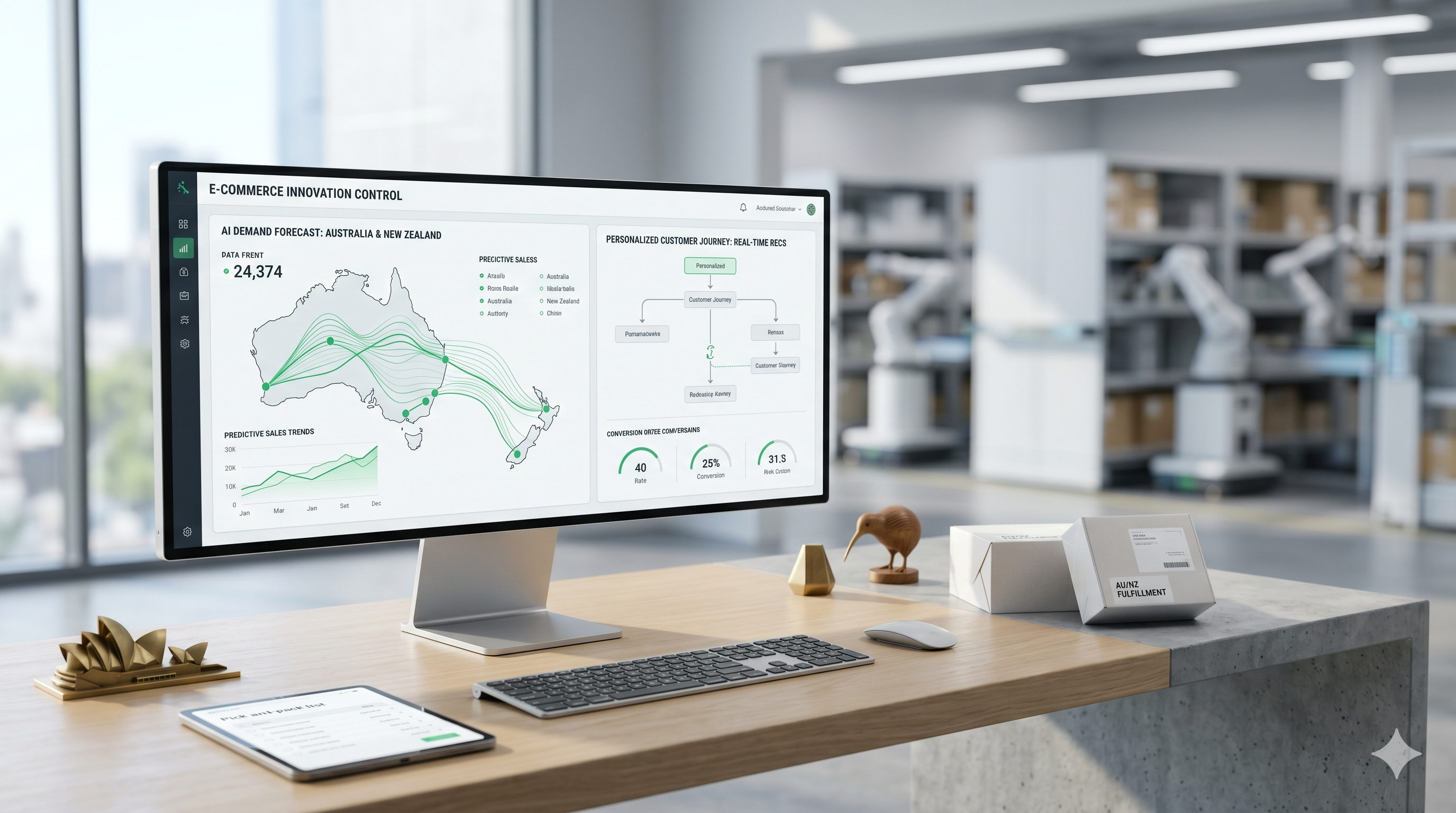
The New Retail Reality: Where AI Meets Creativity
Remember when online shopping meant scrolling through static product images and reading generic descriptions? Those days are rapidly disappearing. AI isn’t just changing e-commerce – it’s completely transforming how brands connect with customers through creative experiences.
For retailers and e-commerce leaders, this shift brings both exciting opportunities and complex challenges. How do you harness these new creative tools while maintaining your authentic brand voice?
AI-Powered Personalisation: Creating Shopping Experiences That Feel Human
Basic product recommendations are yesterday’s news. Today’s AI systems analyse dozens of customer behaviour signals to craft truly individualised experiences.
Take Adore Beauty, for instance. This Australian online beauty retailer implemented an AI-driven personalisation engine that goes beyond simple “customers also bought” suggestions. Their system analyses purchase history, browsing patterns, and even the time spent viewing specific products to create unique customer journeys.
The results speak for themselves:
- 62% increase in email click-through rates
- 31% higher average order value
- 15% reduction in cart abandonment
“We’re not just showing products anymore – we’re creating personalised beauty experiences,” explains Kate Morris, Adore Beauty’s founder. “Our customers feel understood, not targeted.”
What makes this approach work is how it combines data intelligence with creative messaging. The AI identifies opportunities, but the creative execution still requires human insight to feel authentic rather than automated.
Visual Commerce: When AI Becomes Your Design Partner
Perhaps the most visible revolution is happening in visual content creation. AI tools now generate product images, design marketing materials, and even create virtual showrooms – all with minimal human intervention.
For example, furniture retailer Koala has experimented with AI-generated lifestyle imagery showing their mattresses and furniture in various home settings. This approach allows them to produce hundreds of visuals at a fraction of the traditional photography cost.
However, the most promising applications combine human creativity with AI capabilities:
“We still need creative directors and designers,” says Tom Hale, an e-commerce consultant in Sydney. “But now they’re focusing on creative strategy while AI handles the production variations. One designer can effectively produce work that would have previously required a team of ten.”
This collaborative approach typically yields:
- 70-80% reduction in production time for visual assets
- 40-60% decrease in creative production costs
- 3-4x increase in the number of creative variations tested
The winning formula isn’t replacing human creativity – it’s amplifying it.
From Blank Page to Product Page: AI Content Creation
Writing product descriptions for thousands of SKUs has always been a tedious, time-consuming process. AI writing tools are changing this reality for many e-commerce businesses.
“We used to spend weeks writing descriptions for new season arrivals,” says Emily Chen, marketing director at a New Zealand fashion retailer. “Now our team creates detailed briefs and style guidelines, then uses AI to generate the first drafts. Our copywriters focus on refining and adding brand personality rather than starting from scratch.”
This workflow transformation typically delivers:
- 65% reduction in time spent on routine content creation
- More consistent product information across the catalogue
- Ability to rapidly update content for seasonal changes or trends
The key to success? Maintaining a clear brand voice through human oversight. Companies that simply generate and publish AI content without editing often end up with generic, soulless descriptions that fail to connect with customers.
Creative Decisions Backed by Data Intelligence
One of the most powerful yet underutilised applications of AI in e-commerce is using predictive analytics to inform creative decisions.
Traditional A/B testing tells you what worked after the fact. AI predictive models can suggest what creative approaches are likely to resonate with specific customer segments before you launch.
“We’ve moved beyond simple testing of blue versus green buttons,” explains Daniel Wong, analytics director at a Melbourne-based digital agency. “Now we can predict with about 80% accuracy how different creative approaches will perform across various customer segments.”
This predictive capability allows creative teams to:
- Focus resources on concepts with the highest probability of success
- Tailor creative executions to specific customer segments
- Reduce the number of underperforming campaigns by identifying issues early
The most sophisticated retailers are now building feedback loops where AI analysis directly informs the next round of creative development – creating a virtuous cycle of continuous improvement.
Conversational Commerce: When AI Becomes Your Sales Assistant
Chatbots have evolved from simple customer service tools to creative sales assistants that genuinely enhance the shopping experience.
New Zealand skincare brand Ethique uses an AI shopping assistant that goes beyond answering basic questions. Their assistant helps customers identify skin concerns, recommends personalised product regimens, and even shares educational content about ingredients – all while maintaining the brand’s friendly, educational tone.
“The conversation feels natural because we’ve trained the system on thousands of actual customer service interactions,” explains Brianne West, Ethique’s founder. “It reflects our brand personality while providing genuinely helpful advice.”
Creating effective conversational AI requires:
- Extensive training on brand voice and product knowledge
- Clear guidelines on when to escalate to human agents
- Regular updates based on new customer questions and feedback
The most successful implementations focus on being helpful rather than pushy – using conversational intelligence to solve customer problems rather than simply driving sales.
Finding the Sweet Spot: The Human-AI Creative Partnership
As AI tools become more sophisticated, the question isn’t whether to use them, but how to create effective workflows between human creative professionals and their AI partners.
Fashion retailer The Iconic has restructured its creative teams around this new reality:
- Strategic creative directors define the brand vision and guidelines
- AI systems generate multiple creative variations based on these guidelines
- Human designers and copywriters refine and customise the output
- Analytics teams measure performance and feed insights back into the process
“Our designers initially worried AI would replace them,” admits Sarah Johnson, creative director at The Iconic. “Instead, it’s eliminated the tedious parts of their jobs and allowed them to focus on high-value creative decisions. They’re actually more creative now, not less.”
This partnership approach requires new skills from creative professionals:
- Understanding AI capabilities and limitations
- Developing effective prompts and guidelines
- Critical evaluation of AI-generated content
- Identifying opportunities where AI can add unique value
The most successful teams view AI as a collaborative partner rather than either a threat or a magic solution.
Navigating the Ethical Minefield
Despite its enormous potential, AI-driven creativity brings significant ethical considerations for e-commerce brands.
Transparency becomes a crucial issue when customers can’t easily distinguish between human-created and AI-generated content. Several Australian retailers have faced backlash after failing to disclose AI-generated product imagery or reviews.
Additionally, as more brands adopt similar AI tools, there’s a real risk of creative homogenisation. “We’re already seeing a sameness in AI-generated content across different brands,” warns ethics researcher Dr. Amelia Raymond from the University of Auckland. “Without careful customisation and human input, distinct brand voices could disappear.”
Responsible e-commerce companies are addressing these challenges by:
- Clearly disclosing when content is AI-generated or enhanced
- Investing in custom AI models trained specifically on their brand voice
- Establishing ethical guidelines for AI usage across marketing functions
- Regularly reviewing output for potential bias or misrepresentation
Looking Ahead: The Next Creative Frontier
The integration of AI creativity with emerging technologies promises even more transformative experiences:
Augmented reality combined with generative AI will enable customers to visualise products in their own spaces with unprecedented realism. Imagine seeing that couch in your actual living room, with lighting that matches your home’s natural light at different times of day.
Personalised video generation will allow brands to create custom product demonstrations tailored to each customer’s specific interests and needs – at scale.
Voice commerce will evolve beyond simple commands to meaningful conversations about products, with AI assistants that understand context, preferences, and even emotional cues.
“We’re just scratching the surface of what’s possible,” says tech futurist Maria Henderson. “The next generation of AI creative tools will feel less like automation and more like collaboration between brands, customers, and intelligent systems.”
Embracing the AI Creative Revolution
For e-commerce leaders, the path forward requires balancing innovation with authenticity:
- Start small but think strategically. Identify specific creative challenges where AI could add immediate value rather than trying to transform everything at once.
- Invest in your team’s AI literacy. The companies gaining the biggest competitive advantage are those where creative professionals understand how to effectively direct and refine AI systems.
- Maintain human oversight. The most successful AI implementations in e-commerce maintain clear human responsibility for the final creative product.
- Measure outcomes, not just efficiency. While AI can dramatically reduce production time and costs, the true measure of success should be customer engagement and conversion improvements.
AI isn’t replacing creativity in e-commerce – it’s redefining it. The brands that thrive will be those that view AI as an extension of human creativity rather than a replacement for it.
Ready to explore how AI can enhance your e-commerce creative strategy? Book a free 30-minute consultation with our digital innovation experts at www.innovatenow.co.nz or email us directly at info@innovatenow.co.nz.
Want more insights on technology trends shaping retail and e-commerce? Call us at +64 210778930 to discuss how innovation can drive your business growth.
Want to see how we apply this for NZ and AU businesses? Learn more about our approach to AI agents.